The Biology of Disruption: 5 Lessons from Instructure’s “Live & Local” Debut
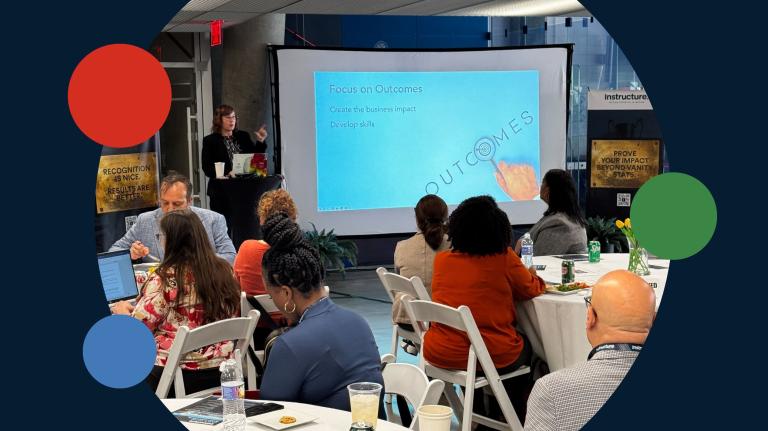
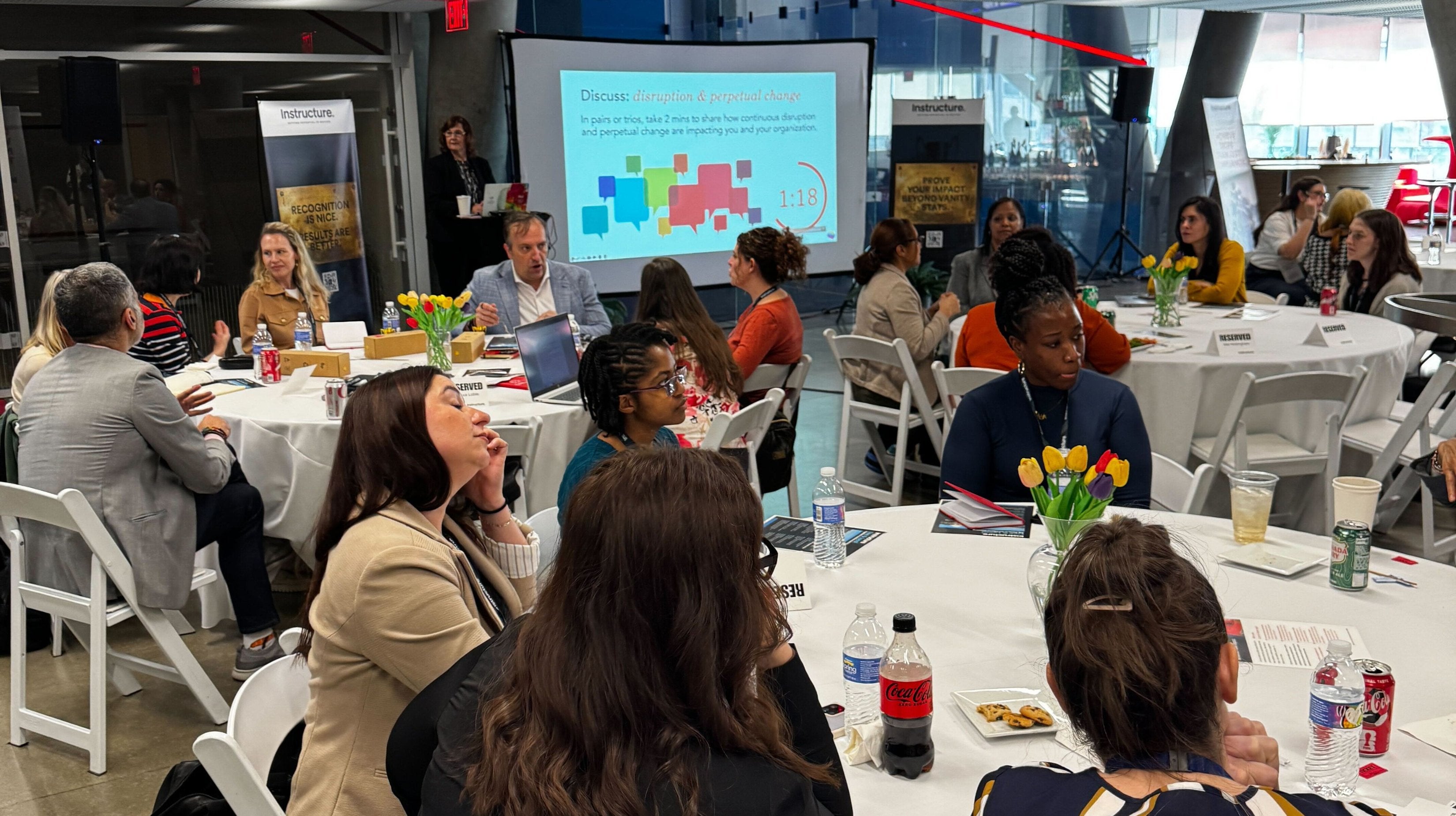
Walking into our first “Live & Local” event, held excitingly at Squash on Fire last week, the energy in the room was magnetic. Nestled between the squash courts and the warm DC sunshine streaming through the windows, there was a hum of excitement from attendees, eager to learn and participate.
Beneath that buzz, a serious discussion about change was taking shape. Change in how the workforce views the value of training in relation to career growth, and a growing need for businesses to rethink how they design learning experiences to better align with both workforce expectations and broader growth strategies. Throughout the day’s discussions, what we learned was that it’s not just about moving up the ranks, it’s a drive hardwired into our biology. And, it’s far deeper than any career goal.
Here are five takeaways from the event that drove the largest amount of discussion, and will act as topics for our next Live & Local event coming soon.
Takeaway 1. Your brain on change: It’s not just "stress"
The event opened with Dr. Britt Andreatta, who shared a sobering reality check: the average employee now navigates over 10 major enterprise changes per year, up from just two a decade ago. She explained that our biology hasn't caught up to this pace, and when we face constant disruption, our brain’s amygdala (fear center) and habenula (failure center) stay on high alert. What does this mean for leaders? Resilience isn't a "soft skill" that you hope your team has; it’s a design requirement you must build into your organization’s DNA and reinforce via training that empowers resilience in employees instead of fear.
Takeaway 2. Start tracking competency over checkboxes
Instructure’s Chief Learning Officer, Melissa Loble, and VP of Strategy, Kevin Martin, both took aim at the traditional “system of record”, platforms generally used to prove someone clicked through a compliance training, and spoke in favor of the shift towards a “system of engagement.” A system of engagement training approach focuses on a personalized and modular system designed to put more outcome-based scenarios in the curriculum, ensuring the employee uses more critical thinking skills and rewards decision-making. Whereas, the more traditional system of record training program focuses on whether the employee has only finished the course.
Takeaway 3. Solving the "ghost skills" crisis
One of the most startling points made by Kevin Martin was that many companies lack full visibility into the skills their employees already possess. Dubbed the "Ghost Skills" problem, this often can lead to companies spending valuable time, money, and resources looking to hire from outside, when the ideal candidate is already in the building. Instead of spending a fortune on external hiring, the smart move is to use AI-driven skills mapping to find the talent already sitting "three virtual floors down.” Organizations that get this right see employee retention rates double.
Takeaway 4. AI: Digital teammate that raises the bar
There’s no debate that AI is here to stay, and while many are still treating it like a fancy search engine, the discussion in the room was more focused on how AI use can manage many end-to-end workflows, as well as help to create more personalized training to address employee uniqueness. AI can now analyze customer data and use that data to create personalized learning outlines in as little as 90 seconds.
In addition to building real outcome-based training scenarios, both Kevin and Melissa shared how AI agents are employed to handle repetitive tasks, freeing humans to focus more on high-level strategy. As Melissa put it, “AI doesn't replace the L&D team; it simply removes the ceiling on what they can accomplish.”
This was further reinforced by Zach Pendleton, Chief Architect at Instructure, who highlighted that while AI is crucial element of executing scalable and valuable change, it still begins with the correct framework; creating personalized training with the end user in mind, building a measurement plan that incorporates outcomes vs completion, and having a connected system that allows for more critical thinking, collaboration, and ideation.
Takeaway 5. The biggest non-negotiable is time
Perhaps the most human takeaway came from the "Engagement Eight" framework. Melissa emphasized that if employers don't protect time for learning, they’re essentially asking employees to choose between their job and their development. She referenced a Gallup 2024 study that noted two-thirds of adult learners say time flexibility is their #1 factor when choosing a program, and successful companies are now building dedicated, protected hours into the weekly work schedule.
Essentially, if you respect their time, you will earn their attention.
As the event wrapped up with a final raffle and happy hour, the big question left hanging in the air was: "Does your current system help you stay ahead of the curve, or is it just keeping records of the past?"
Know someone in New York City, Chicago, or San Francisco? We’re heading there in April and would love to meet them. Feel free to share the event with your network.