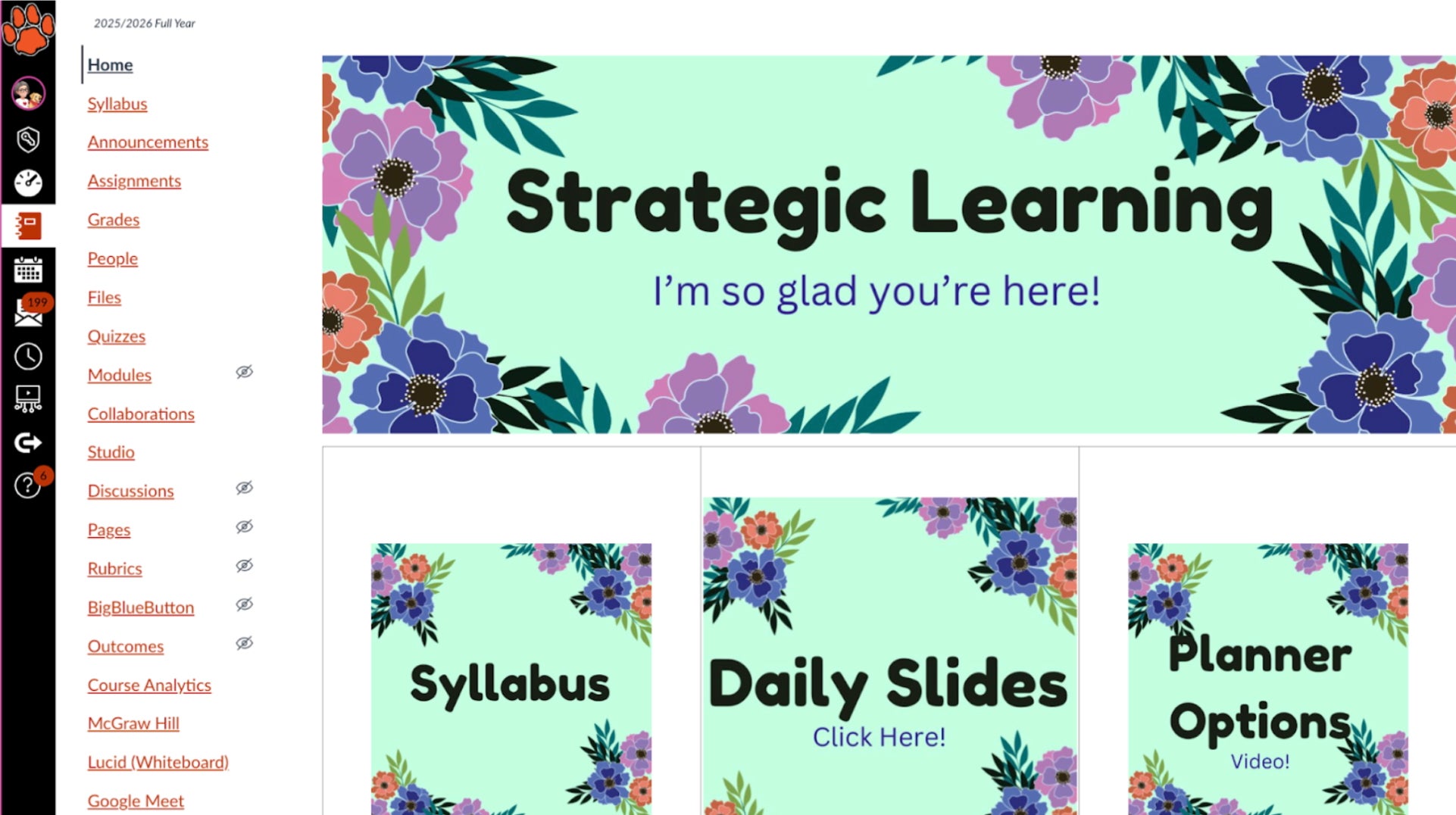
“I’m so glad you’re here.”
Those words greet students who log into Kim Burlinson’s Canvas homepage for her strategic learning class. It’s a simple phrase she made into a Homepage button, but one that sets the tone for everything that follows. Canvas is an extension of Kim’s classroom and a place of belonging.
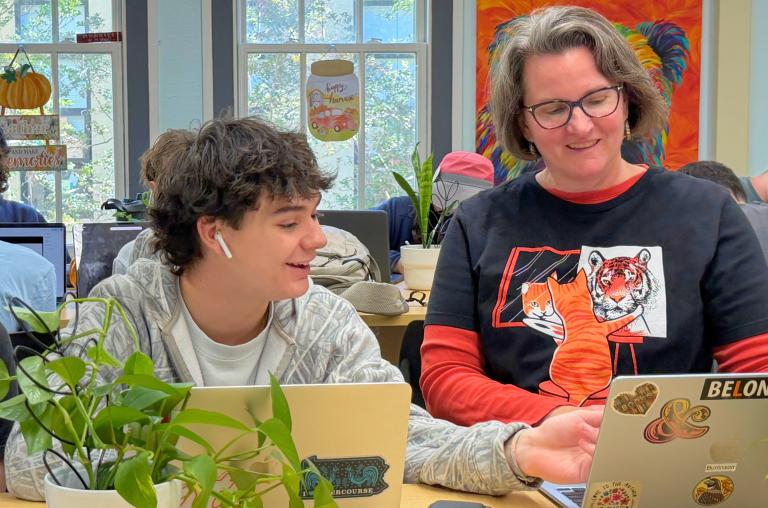
Known for organizing assignments and tracking grades, Canvas has also become a tool for connection and growth for Los Gatos High School’s Kim Burlinson and Saratoga High School’s Meg Battey, who use the platform to support social-emotional learning (SEL), student engagement, and academic independence.
Canvas has helped these teachers connect heart and mind through self-reflection, personalized communication, and parent collaboration, so every student in their class feels seen and supported.
Kim Burlinson: Fostering a growth mindset and emotional awareness with Canvas
Kim revamped her entire Canvas structure after taking a professional development course on AI and classroom innovation in the summer of 2025. One of her first projects was creating a video tutorial showing students how to use the Canvas Calendar to track all their assignments, not only from her class, but from every teacher. This, she explains, “helps students take ownership of their schedules and manage stress around deadlines.”
In her strategic learning class, many assignments are journal-based, focused on themes of growth, self-awareness, and resilience. Instead of having students fill out a traditional “getting to know you” worksheet, Kim uses Canvas Studio, where students can introduce themselves in their own voices through video. “It makes it so much more personal,” she says. “Students express themselves differently when they can speak and be seen."
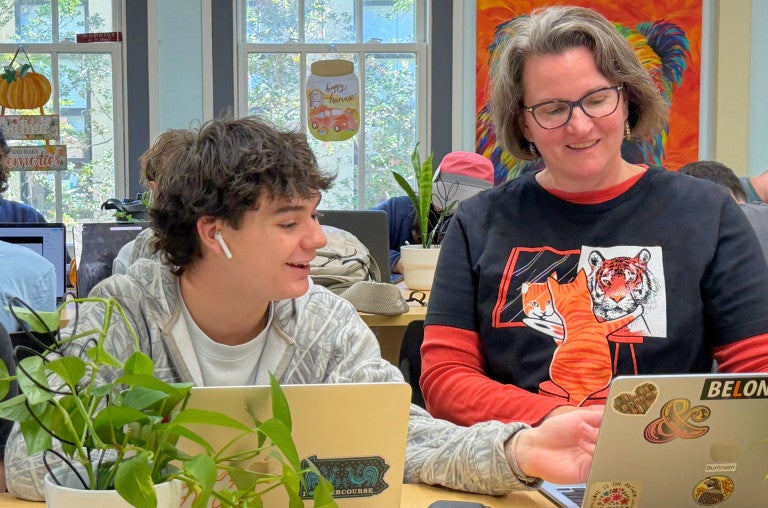
As a biology teacher, Kim also structures her course using modules instead of assignment lists. Each module includes daily slides with hyperlinks to that day’s activities, a table of contents, and clear indicators of upcoming tests and due dates. This organization helps her students, many of whom have learning accommodations, navigate the course more confidently and independently.
“Canvas allows me to meet students where they are,” she says. “With all the different accommodations, such as extended time, flexible pacing, and even students' preferred names, the platform helps me track what each student needs and ensures no one falls through the cracks.” She also uses the Notes section in Canvas to remind herself of individual student preferences and supports.
Through Canvas analytics, Kim has noticed a strong correlation: “The students who are the least engaged in Canvas are almost always the ones struggling the most academically.” By monitoring participation, she can reach out early and start a conversation before a small challenge becomes a larger problem.
Meg Battey: Teaching students to take ownership of their success via Canvas
At Saratoga High School, Meg Battey uses Canvas as an essential part of her SOAR (studies, organization, and responsibility) class, a course she co-teaches with Natasha Ritchie, designed to help students develop into self-sufficient agents of their own success in high school.
Through SOAR, students receive one-on-one support to build skills in self-advocacy, organization, time management, critical reasoning, and professional communication. And Canvas plays a central role in that growth.
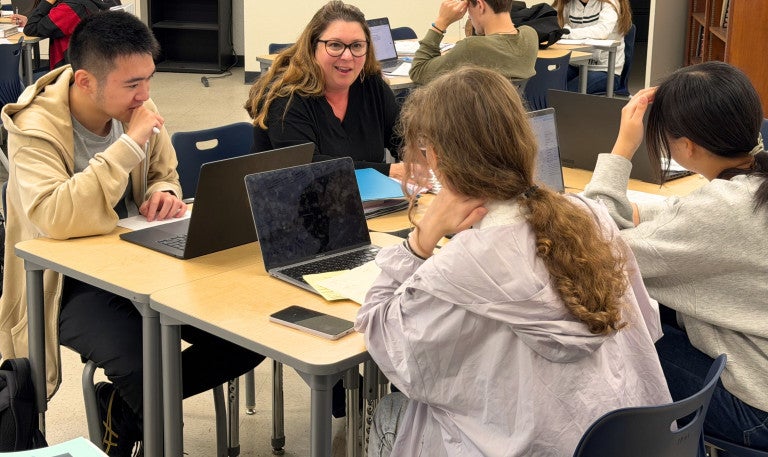
Meg shows students how to proactively use Canvas for grade checks, teaching them how to monitor their own academic progress. With her unique access to students’ Canvas dashboards, she can see grades across all their classes and intervene when needed.
“If a student has low grades showing in Canvas, part of the SOAR program requires that they schedule tutorial time with their teachers,” Meg explains. “It’s about helping them learn to take responsibility before it’s too late. And ultimately not add on additional mental pressure later in the semester.”
She also uploads study tips and guides as Canvas posts, modeling how to use the platform as a hub for organization and accountability.
Meg’s deep experience teaching college prep, English 9, and English 11 classes has shaped her approach. In those courses, she used Canvas modules to post assignments, essays, and resources, supporting struggling writers by scaffolding tasks directly within the platform. Through Respondus, a custom lockdown browser integration with Canvas, students write essays directly in Canvas, allowing Meg to monitor progress, provide quick feedback, and guide students through the writing process step by step.
Ultimately, the goal is to help students see Canvas not as a system that judges them, but as a tool that empowers them. Once students understand how to use Canvas to plan, reflect, and communicate, they can take charge of their own learning.
Canvas and SEL: Building a digital community of care
Both Kim and Meg demonstrate that Canvas can be more than an online classroom, but a digital community that nurtures the whole student.
Teachers can use Canvas Inbox and Announcements to send encouraging notes, share “Mindful Monday” reminders, or post “Feel-Good Friday” celebrations highlighting student achievements beyond grades. They can use Canvas Studio for video reflections, journals for emotional processing, and analytics to identify students who may need extra support.
By intentionally weaving SEL into Canvas use, teachers like Kim Burlinson and Meg Battey work toward Los Gatos and Saratoga High Schools’ core goals of social-emotional learning and helping students build confidence, resilience, and self-awareness. Their work reminds us that emotional learning doesn’t compete with academic learning; it enhances it.
Because sometimes, supporting a student’s success starts with a simple message on their homepage: “I’m so glad you’re here.”