

Situation
Artificial intelligence (AI) is already part of the workplaces that City University Hong Kong’s learners are moving into. Graduates are expected to work alongside it, using it to support how they analyse information, develop ideas, and approach problems.
That shift raises an important question for universities: if information is easy to access, what should learners actually be doing in the classroom?
CityUHK has been thinking carefully about that challenge. Known for its international outlook and commitment to innovation, the university serves more than 20,000 learners and has used Canvas since 2015 to support its digital environment.
In recent years, educators at CityUHKHK have been rethinking how their courses prepare learners for that reality, placing greater emphasis on discussion, teamwork, and shared problem-solving.
From the employer perspective, communication and collaboration are skills that AI can’t replace.
Chi-Un “Leon” Lei, PhD, PFHEA
Senior Education Development Officer, Talent and Education Development Office.
Insights
Lecture-based teaching still shapes many university classrooms. An educator presents material, learners listen and take notes, and their understanding is assessed later.
At CityUHK, educators saw the limits of that approach. Hearing about an idea isn’t the same as working through it with others, and “soft skills” like cross-cultural collaboration and problem-solving are developed through repeated interaction rather than rote memorisation.
“Team-based learning addresses things that students are missing today, especially the willingness to communicate and collaborate with other people,” Leon said.
Solution
As AI becomes more embedded in professional environments, those capabilities are taking on greater importance. In response, CityUHK has been reshaping its courses so that team-based learning plays a central role across many programmes.
“We already have around 120 courses that have already implemented team-based learning. This semester, we’ve added about 100 more,” Leon said.
K.T. Tay, a consultant who’s worked closely with the university on digital initiatives, described the shift in practical terms.
“In today’s world, students already have access to all the content they need,” he said. “The real question is how they learn to solve problems together.”
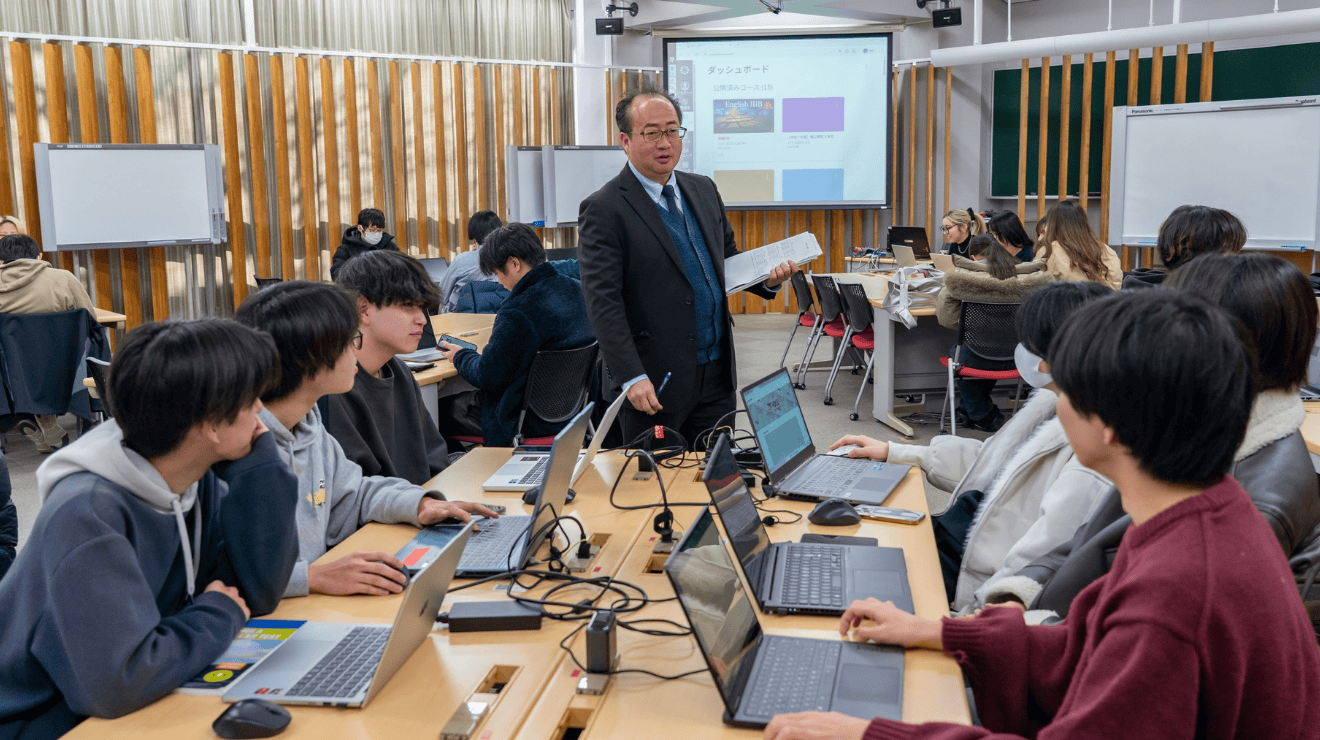
With Canvas embedded across the university, instructors can initiate discussions, organise group work, and support these activities consistently across courses. Rather than structuring class time around lectures, sessions are built around group work and discussion.
Outcomes
As more courses adopt team-based learning, the class experience is changing. The emphasis has shifted from students simply receiving information to applying the knowledge with peers, an approach that reflects how learning connects to professional practice and more aligned to what students will be expected to do in the workplace. Learners spend less time listening and more time analysing questions together, testing ideas, and working through problems in teams.
Instructors are also able to extend those interactions beyond a single class. Learners can continue discussions and group work across different sessions, maintaining continuity between classes.
“Although students may be in different classrooms, Canvas allows them to stay virtually connected and collaborate together,” said Leon.
Download the case study