
Podcast at the Museum: How Museums are Implementing Digital and Experiential Learning
by InstructureCast
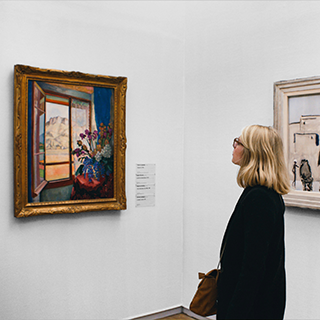
In this episode, Melissa and Ryan are joined by Katherine Burton-Jones. Katherine discusses the intersection of museum studies and technology, sharing her journey from archaeology to teaching at Harvard Extension School. She highlights the evolution of museums over the past few decades, emphasizing the importance of human-centered learning and the challenges museums face in modernizing. The group explores how technology, including AI, can enhance the museum experience and foster social connections.
Takeaways:
- The role of museums has evolved to become more user-centric and inclusive.
- Data collection is crucial for understanding visitor needs and behaviors.
- Technology can enhance the museum experience and make it more accessible.
- AI has potential applications in museums, but ethical considerations are important.
- Personal stories behind objects can create deeper connections with visitors.
- Museums can serve as spaces for social connection and community building.
- Curators of the future need to be data-aware and conceptually prepared.
- The future of museums lies in embracing technology while remaining inclusive.
Show Notes:
- Katherine’s Bio: https://www.katherineburtonjones.com/
- The Museum of Everyday Objects: https://www.museumofeverydayobjects.org/welcome-desk
What is Educast 3000?
Ah, education…a world filled with mysterious marvels. From K12 to Higher Ed, educational change and innovation are everywhere. And with that comes a few lessons, too.
Each episode, EduCast3000 hosts, Melissa Loble and Ryan Lufkin, will break down the fourth wall and reflect on what’s happening in education – the good, the bad, and, in some cases, the just plain chaotic. This is the most transformative time in the history of education, so if you’re passionate about the educational system and want some timely and honest commentary on what’s happening in the industry, this is your show.
Subscribe wherever you listen to your podcasts and join the conversation! If you have a question, comment, or topic to add, drop us a line using your favorite social media platform.
-
Podcast at the Museum - How Museums are Implementing Digital and Experiential LearningWelcome to Educast three thousand. It's the most transformative time in the history of education. So join us as we break down the fourth wall and reflect on what's happening. The good, the bad, and even the chaotic. Here's your hosts, Melissa Lobel and Ryan Lufkin.
Welcome everyone to Edu cast three thousand. I'm your co host, Melissa Lobel.
And I'm your co host, Ryan Lufkin. Today, we're joined by Katherine Burton Jones, faculty leader in museum studies at Harvard Extension School and longtime innovator in how museums use technology. I'm super excited. This is a an area I'm super interested in. Kathryn's work expands archaeology, digital collections, and helping institutions rethink how they engage learners, which now is the most disruptive time in the history of education. I'm excited to learn more about how museums are evolving and what that means for learners today. Welcome to the show, Katherine.
Thank you so much. I'm happy to be here.
Awesome. So I give you a high level overview, but tell our audience a little bit about you and your background.
Well, it's pretty weird, but you know that. I like that. Yeah. How I got into it, I'm not sure.
But I always enjoyed archaeology from sort of the age thirteen, and I thought, okay. So I'm gonna be an anthropologist. And that's what I studied, and then I'm like, but we need some tools to work with here. So I started taking computer science courses and did that as well.
And that's how I got into this crazy little world of objects, stories, and technology. Amazing.
I love that. And also teaching, which is such an interesting part of your background and what you do now.
One of the questions that we love to ask our guests is a favorite either teaching or learning moment in your life. We love to ground it with that. So it could be you teaching. It could be you learning.
It could be you observing this. It could be within your family. Whatever comes to mind. Would you mind sharing one of your favorite teaching and learning moments?
Melissa, may I have two, please?
Please. We would love Yes.
So one from the distant past. So I went to a conference in the mid nineteen nineties when everything was magical and new and learned about the world wide web and websites. And I went back to the Peabody Museum where I worked then, learned HTML and decided that we would put up all of a basic web page for all of the Harvard museums. And we did.
Names. We organized that as well. And that was the start of that.
So that's kind of a magical technology moment for me.
Absolutely.
Well, I think a lot of people forget. Like at that time, we were just figuring out standardization around URLs and what do we call websites and how do we organize that. So that that seems on the simple side, but it really was like pushing the the envelope at that time.
So that was right. But so dot org, dot e d u, what are we? You know? And so we did that.
The one that's more recent is in my class in the summers is about making decisions with data for museums. And so I decided to challenge them by using Excel last summer. You know, it's the Swiss army knife of technology anyway. We know that.
But a lot of them had only used it for a spreadsheet here or there. But we got them using pivot tables. We used the new features of Excel and things like that. They were able to take data from museums through APIs and bring in actual exhibition or collection data and say things like, it looks like when a female director is in charge of the museum, the exhibitions are more inclusive.
And so, you know, proving things with data that were assumptions before but not grounded in fact. And this way they had it. And we had seven weeks to do it. I'm gonna tell you, and I will use a pun here, they excelled.
They really did. Love it. Really did.
Well, probably, you know, without using those tools, they probably couldn't have done it in that time frame. Right? I mean, that's just it allows so much so much more rapid access to that information.
Yeah. I don't know how they would have gotten the data organized if they could get it from the museums, but what would they do with it?
Yeah.
So tool kits were really important.
That's such powerful learning moment for them and probably also for you to see where and how they're building their own skills as leaders in these museums and how they can best impact the sort of the role of museums in the future, which I think is is gonna become even more and more important, but I'll talk about that later. I'm curious. You chatted a little bit about your background. How was that actually led you to directing the museum studies program at Harvard? Like, how did this all connect in your weird background?
In my weird background. In nineteen ninety seven, I started teaching a class called museums and technology. And then even then, the extension school had online courses, but they would be filmed by a videographer, processed, then put out for asynchronous learners. We had people in the classroom, but we also had people online.
So that was very interesting, and I stayed with that program. I still teach that course coming up in the spring, but it'll be a little different this year. And just changed that over time. I had other jobs at Harvard.
I worked at the Peabody Museum. Then I was the assistant dean for IT and media services at the Divinity School for a time, for a decade, creating digital assets for faculty. We didn't have Canvas then, but we were using a Harvard based tool. Then things changed at Extension and things changed in my life, and there was an opening for me to be the director of museum studies.
So I bring a background of technology, but I'm kind of a generalist in museums now as well.
I love that. And it's so funny because I think that there's such a strong connection between learning, the classroom learning, and museums in kind of demonstration of learning, these kind of archives of what we learn as a human species, right? And we'll actually include a link to your website as well, because I think it's your background is just fascinating. Think our audience will probably be interested in learning more about that. But have you seen the role of museums evolve over the last, really, you know, twenty years? We we go back to the nineties, so I guess, you know, maybe thirty years. But they really are, I think, the stodgy idea of what a museum was back in the day to where we are now, it really has evolved quite a bit.
Oh, I'm so glad you asked that question because it's a lead into a project that I did with a colleague at Florida State.
His name is Paul Marti. He's the associate assistant provost for academic innovation at Florida State.
But what we did was to do oral histories of museum computing over fifty years. It's really fifty years. And so even back in the day of mainframes, people were thinking about how can we organize museum collections data and do that. And so we collected fifty oral histories. I can send you the link for that. And then we wrote a book about it called The Invisible History of Museum Computing. So how has it changed?
I think that it's changed to become more user centric or visitor centric both on web pages as well as technology in the museum. That technology is more pervasive in the museum, and that top management, the c suite, the leadership team understands technology better now. Even if they're not using it to the Katherine Jones standard. But, you know, they probably will if I have my way, but but they're understanding it better, and they're more data aware. And there's a wonderful example of a visitor services person knowing that data collection was important, starting to collect it again using Excel.
And guess what? The senior leadership team heard about it. They invited him to an all staff meeting. They were pretty amazed. And now the whole museum uses that technique that he established to collect data on their audience, the visitors.
He also used weather data. We can see how that could come in. A successful exhibition is either rain based because everyone has to come in, or people don't come because they have a big snowstorm. So weather's important too.
That is interesting. I mean, there's the side where it's like, you know, most museums, you have what's on display, but then you have huge archives of artifacts and information, right? So organizing that, but then also analyzing the, you know, customer, the learner facing side of it and understanding their behaviors is is huge.
It is. Yeah. I recently had an opportunity to to visit a museum when I was traveling to Norway, and it just made me think about, as you're describing this, all the moments of data gathering that they were doing as you moved from floor to floor and you observed and learned about different aspects of this artist. And then even sort of the evolutionary path of, you know, did you start from the top to the bottom or the bottom to the top?
Like, there's just so much interesting data there that I never thought about that. And it's, to me, it's really interesting from a museum experience and a user perspective. It's also interesting from a learning because that is a learning setting. A museum is truly a learning setting.
Maybe a nontraditional one, but it is definitely that. Which sort of leads me to my next question for you, Catherine, is so you work with Harvard. You teach and lead there. But you also work with other organizations and and how they support their museums, whether it's higher other higher education institutions, whether it's nonprofits.
What are some of the challenges that you see them face more broadly as they're trying to modernize and even look to the future of the way individuals experience museums?
So, again, I mentioned that there's been a maybe a fifty year history or longer in museums, and it started with collection systems, but then it grew into every system in the museum. So it's really across the enterprise we have technology. One of the biggest challenges is to figure out how to replace the legacy system and with what system. So if a museum could understand that they need to do a needs analysis first, then they'd be better off in a better place.
And sometimes I step in and do that If I'm on a board of a museum, I mentioned a few that I'm on the board of, we kind of take a deeper look to see what the real need is. So one museum that I'm associated with, the events rental person brought in Salesforce for nonprofits. Nobody else on the staff understood it. And after a five year period, I revisited that.
I said, are you using Salesforce? And they're like, well, for calendaring. I'm like, you've got Outlook. Let's switch.
You know?
Okay.
So it's just making the right decision and finding the right fit for the right technology tool. I think that's the biggest challenge. Funding, of course, is always an issue for museums.
Cross education, that's always always the case.
Oh, yeah. That's true.
Yeah. One of the things that Melissa and I spend a lot of time talking about too is kind of the idea that we're focusing more on human centered learning. Right? We've we've really it's student centered in a way that we've never had before. How is technology impacting how museums connect with their learners, their audience?
Sure. So thinking about that human centered approach and also data collection so that we know who's coming in, what their needs are, is everything accessible, and how do we make it more so. But I think what museums can do now through the websites, through the language of the database, is to begin to make things more inclusive. And so just an example, when we had databases a long time ago, they were created by scholars in art history or history of science or other disciplines.
And that language is very scholarly and not accessible by the general public. Now we have people thinking about how can we involve the cultures that created these objects? How can we use different terminology?
How can we make that language more open to the general public? One example I would give of that is the Metropolitan Museum has had what they call the timeline of art history. And so for me, somebody who's used the web and technology for a long time, it's a great example of multiple access points through maps, visual collections, thematic essays, and timelines too. You can look at a timeline and click on it and go to ancient Greece and you can see what the Met has for those. So I think bringing the community in through technology and the object stories is digital storytelling and the ways we can really get at that. And I think that's true for education as well where we could give students more access to this type of information that they didn't have before.
So I'm a sucker for timelines because I actually think they put these different events that we often study individually. Right? Yeah. We often study them individually and when you've got this timeline that actually shows how they interacted and how they led to each other, right, what those interdependencies were, I think there's so much fast it it's fascinating there.
Exactly. I did an exhibit on Native American running back in nineteen ninety six because it was going to be a hundredth running of the Boston Marathon.
Oh, wow.
And I had input from Zuni runners. And so we were trying to think what happened in the world of the native American United States, for lack of a better way to call it Yeah. At that time, and what could we think about? So we had fidepides in Greece.
We had other timelines about running that could come into that, but it was linear. And now we had timelines that are interactive, and people go from, oh, here's Pheidipides and here's the Zuni runner in nineteen ninety six. Right? So they can put it all together in a way that we couldn't do before.
So cool. That contextualization is so powerful. I remember earlier, I've taught for a long time, twenty years online. And as I was helping other teachers, as museums in sort of, I would say, the, you know, two thousand ten to two thousand twenty started to really get online, I know you've been leveraging multimedia and online opportunities way before that. But but as we really start to see that become a norm, these were really great teaching and learning assets, and they're really powerful. And I think that example of that of timelines is a good one, the contextualization from a learning perspective that can happen.
And as you've helped introduce this idea of multimedia museums and even, you know, web based exhibits, I know that became really popular during COVID because teachers were using those left and right in his way to sort of ground new interactive learning activities for students and and again, them context. What are some of the lessons you've learned or perhaps even ideas for other museums and other leaders in education to think about how to digitize and even maybe leverage things like AI as they're building their future strategy?
It's a good question. We are thinking now how can we use AI? What is the ethical use of AI In so many different ways, both in teaching and learning, but also in the museum setting. And I don't think it's quite there yet with museums.
We've looked recently to see who's writing about it. And there are not many articles yet. Again, Paul Marty and I talk about it probably every Friday. How can we leverage this in a different way so that people can get the right information from the collection?
One of the examples that Paul Marty and I looked at, and then today when we had a planning session for another course, we looked at what's called the living museum. And they took the collection from, I think it's the British Museum, put it into a large language model, and now you can chat with the living museum. You can choose an object that you want to explore better, whether it's, oh, a mask from, I'll say, the Northwest Coast. They probably don't have that, but they might.
Or whether you wanted to learn more about the Elgin or Parthenon marbles that they are keeping, you know Yeah. Controversial.
Very controversial. Yeah.
So ways that we could use better to dig deeper into the stories of our objects, and also give them a different life, if you will, whether it's an immersive experience or using technologies like AR and VR to enhance the experience within the museum or outside. And Melissa, you mentioned, you know, teaching online.
Teachers had even before the pandemic, they would have learning materials that they could use before they took their students into the museum and then after visit materials as well. But during the pandemic, we had to have it be a virtual experience. So how do we bring the objects to life? And that was hard because not everybody was prepared.
Large museums like the Metropolitan Museum, the Harvard Art Museum had digitized their collections over many years, and those were available. They could do a virtual zipline tour of the museum because they had that available. They had lectures prerecorded because they kept them from other events. They could use that.
But it was a huge challenge both for the classroom teacher as well as for the museum as a provider of that.
Yeah. Most of those I'm still upset. I missed the British Museum had a the exhibit on the Roman legion and had the most complete set of legionnaire armor and really dug into the life of a legionnaire on a daily basis. You know, the Roman Empire does live in my head every day. You know, I'm a I'm a cliche in that way, I guess.
No. Not at all.
If you like arms and armor though, I'm gonna invite you to art museum.
Fantastic. Yes.
See the new wing that has the Higgins Armory collection in it.
You mentioned that when we first talked. I was like, I'm taping you up on that. I'm coming to see it. Yeah. But but what's so funny is, you know, because I wasn't able to get on a plane fly to London to to go to see that, you know, now museums can extend that experience into the virtual world, and I it's not time dependent or location dependent in a way that it always has been.
It's true. You know, it's really it's available if they have the means to make it available to them.
Yeah. Which is, like we said, always the challenge. But one of the coolest things about your role that I love in your role as the director of the Harvard Extension Museum Studies Program, right, is you're actually training the curators of the future, right, the historians of the future for this. How do you see, like, like, what are the skills that those folks are gonna need? You know, we talked about this kind of shift in focus, but what are the skills they're gonna need? You know, who do you what do you look for in those folks? Like, how has that role changed?
Well, I'm not sure it's changed for me too much because I always have been teaching people to think about technology conceptually. Because the tool kit changes over time, right?
We have, understand Well, I'll just use AI for now. If we begin to understand how we can train a bot, what language we need to use to tell it exactly what we want it to create. Let's say it's going to be, I don't know, some Google tool that creates a virtual world just to make it up. If we get our language correct and telling the bot what to do, then the world will be created the way we need it to And we won't waste a lot of computing resources by getting it wrong the first or second or third time.
So I want them to be data aware. I want them to be conceptually prepared. But I also want them to experience some of the hands on tools that we have now. Like using a Google Suite or what they can do in Canvas to ways that they might not expect.
The Excel experience was just a miracle for me.
Yeah. It's always like when you don't know what's possible, you're not leveraging those kind of future looking Yeah.
That's interesting.
Speaking of what's possible, and Ryan knows this. Ryan tends to nerd out on the technology and history, particularly Roman history. Although, don't get him started on World War two.
We were too much.
We're go to the national areas.
Yeah.
I tend to turn around on, like, the learning side. And so two things that we're seeing are challenges in society today is attention span, and then also connection, especially coming out of the pandemic when we were so isolated. Now getting people back together and and having human connection is is a challenge. So I'm curious what role you see museums playing in both, you know, how they're architected in both getting people to, like, spend time and absorb something and and have attention and connection to something. And then how are they helping with this social connection as well that is become a challenge for us?
It's been a challenge for museums for a while, and so there have been studies that say the average person spends about three seconds looking at a painting. Do we get them to look longer? Yeah. And so what can we give them ahead of time so they have sort of a fluency with the art or the history or the basic story of clean water and the use of clean water for Boston? If they know a little bit about that going in, I think that they can make a better connection. Also, I think that if we can find ways here's a data collection point too. If we know our audiences, we can think about who are they and what would they like to know about us so that we can do better programming for them and then be creating a more inclusive community when they come into the museum.
So those are some ways that we could think about how we could use technology to make a change in their lives. I'm sure you've heard of close looking in museums. We teach classes about that. Doctors are learning that too because then they they can be more observationally fluent. I'll use that word again.
Interesting.
And what they're seeing because they see in the painting, they can take that deep view.
In one of the classes that we have had in the past, students were asked to sit for an hour in front of a painting and just observe. So slowing things down, observing is something that we could do without technology or with it. But I think using technology to provide that story is really a way to enhance it. I just love to be able to go in. I mean, we've had audio guides forever, but if I can go in and use my phone to connect with whatever the device is that can broadcast to me the story, the deep story of the painting, what Van Gogh was doing at that point in his life when he painted this, then I make that personal connection, and I have a much better experience in the exhibit at the museum that day.
Yeah. Speaking of the Met, there was an exhibit on the Van Gogh's oh, I wanna say they're not spruce trees. I can't remember what the the he he painted the same three trees from, like, different angles.
And they provided really great information on what he was experiencing at the time and why would he paint these three trees from these different angles and different colors. And they talked about the mental health challenges he was facing and that kind of stuff. And it really just put it into context where you're like, no, he just didn't paint those three trees. He liked those two trees. It was every view of those trees was different and is thinking around them. It's fascinating. I like I wouldn't have had that context if they hadn't given me that information.
Well, actually do you get people to pay attention to the context?
I think is what I'm really interested in. Yeah.
I mean, it could be a gallery lecture, you know, with the curator coming in and then giving you time to go back through and experience the art again after you've heard the story. But there was a wonderful exhibit about the opium trade at the Harvard Art Museum and thinking about the objects that came from the China trade that were collected by the merchants and how that all came together. But it focused on the opium trade, which people hadn't really heard when they were thinking about, oh, why do we have this blue and white China coming into homes? You know? So the story got deeper and it was really, really well done. It's a great well, opium trade is not great, but the story of ship captains and Boston merchants and that whole trade is it could be very significant for the Boston area.
And how that opened up, you know, the actual broader political connections to Japan and, like what that did for India and Asia.
And it wasn't just opium that they were after. They were they were trading ginger of all things that became really important. So ginger and silver.
Yeah. And opening I mean, it's one those things I and I happen to have read a book about that. So I'm but it's like when you come cover those layers in history, but you museums just do such a great job of displaying that. To that end, one of the first things that or one of the things that I was like, have to ask about this on the podcast when we first talked was your involvement in the Museum of Everyday Objects, which I'm just fascinated by.
Thank you, Ryan.
Yes. Tell us a little bit more about what that is and why it's so important.
The way I would describe it is that every museum has objects They just happen to have been owned by a famous person or related to a famous event or something like that. So the concept that I had was actually the final assignment in one of my introductory museum studies courses.
So that the student could be the curator of the donor and have different roles around a particular object from the collection. So let's say that grandfather's walking stick or my first camera or objects that were being donated, we could tell the story of that in a way that was very personal, very touching often. And it made the object become extraordinary because the story behind it was what really mattered. And again, what they could collect was what happened at the time. What is the context? So if I was giving a story about the pink bunny that my mother gave me when I went away to college, I could tell the story of things like war protests or what my bunny was seeing when Bunny was at college with me.
So the story becomes very personal, but also a lot of fun to do. And the students had fun with it. And then the next iteration was to work with digital media design students to have them create the virtual environment for me. And they did it with tools. They used Unity, Blender, Eleven Labs, and a few other things to render the environment, which now is degrading a little bit, I should say. I know you're gonna post the link for me.
I'll post the link too. Yep. Yep.
But it's encouraging me to find the new toolkit. Right? And it might just be using something like Spatial or Sketchfab to drop objects in. So we might remake it actually in the spring class. We might. I can't guarantee it. One way or another, it's gonna become a little better because I'm paying every month for that web hosting.
Yeah. Well, I I just love I just love them. It changes the way you look at the objects that are around you in the room. You know? It just I thought I thought the thing behind it was fascinating. I love what you're doing there.
So what would you to donate?
I honestly and I ended up writing little pieces. I have on the wall of my office here, I have a poster from the nineteen sixty seven Oktoberfest in Germany. It's a Lonebrow poster, but it was my father's when he was in the US military. And he was actually stabbed in a kind of a racial arrest.
And there's some of my father's blood in the upper right corner of that. And so it's not just the fact that it's a poster from Oktoberfest and my dad was in Germany, but there was also this context of the racial unrest and the things that were happening at the time as well. And so just to me that this it's a layer on layer piece and it hangs on my wall so I can see it every day. And it's, you know, I actually ended up writing a little a little blurb about it after we talked in that way.
So I think the curatorial acquisition committee would love to accept that virtually.
Yeah.
I love that. I think we know that committee.
I will be submitting this. Yes.
I love that.
I'll share mine. It's it's a stuffed rabbit that I got when I was five years old from my father.
We had gone long story short, I was born and had eye surgery when I was very young. And I had to do years of eye exercises. And I was really quite a shy kid, and they were hard things to do. And I was in Ferris to wear glasses.
I was one of the only kids in my class for a long time to wear glasses when I was little. Like, there just there was I had an identity challenge wrapped up in this. And so I remember it was, like, my third year of doing these exercises, and I would have to leave school early to go do them. And it's this big drama.
And and my father, who rarely he worked full time, and he rarely came to these. It was usually my mother. He happened to come pick me up, he was like, we're gonna take you, and this is a allowance from the past. Some of our listeners will not know this, but we're gonna take you to Toys R Us.
It doesn't exist anymore, but we're gonna take you to Toys R Us so you can pick anything you want because I'm just really proud of you for what you're trying to accomplish. And so I picked this Stuff Bunny. I still have it. It is my absolute favorite childhood possession.
It's Big Bunny. But the thing that Big Bunny so for me, the significance was sort of the challenges as young people and even as me as a young girl growing up and and being different. And how do you like, whenever I look at that, I always think I can work through this whenever I look at that rabbit. Because it's okay to be different and I don't have that I don't have to have that affect my mental health.
But at the time, it was a really tough time for me that I was going through. So that would be my my donation to the museum.
So accepted.
Yeah. Thank you. Thank you.
You see how extraordinary these can be. It's just, you know, it's a great maybe it's a playground for me. I don't know. But I think it's a learning tool for me too, where people can see how an object can really transition from being my pink bunny or your big bunny or your poster to being something that tells a story of that time.
Absolutely.
I just love that.
I love that.
Yeah. Well, and speaking of that, I have one last question for you, and I think Ryan does as well. But my last question is related to this museum of everyday objects and and this approach. We started to get at this, you've answered a little bit of this, but how do you hope this idea maybe influences broader museum curation, especially around encouraging inclusive and more, I wanna say, innovative ideas around how to bring society together in a in a time where I think, and I probably many people would say this about any time, but I feel like right now, we're at a bit of a crisis, and we need to be thinking differently about how we bring society together. So not only influencing your students and yourself in the work and us clearly, how do you help this how do you hope this helps influence other museums?
Well, I think I mean, if we're gonna have it in the Museum of Everyday Objects, let's call it a sandbox. Right? Because we can explore things. We can explore ideas of digital storytelling. We can look at virtual environments, what works, what might be affordable for a museum. How do we lay down the infrastructure to make it happen and be sustainable over time?
And then how do we place those objects and those stories into either the virtual environment or into the real environment that is enhanced through technology? So to me, that allows us to be more inclusive. It puts a welcome sign on the door that is a welcome sign. Everybody's welcome here. And I mean, I have stories from the past who one African American student's mother told him he couldn't go to the Met. She said, it's not for people like us.
And to me, it's a personal challenge to make a museum for everyone.
Yep. I love that.
It's heartbreaking to hear that people would feel It is heartbreaking.
Excluded from such a Oh, because it's meant to be so accepting and so, you know, educational for everyone. So to wrap this up, and this has been an amazing conversation, we're running out of time, but you have such a unique position where you know, the kind of intersection of education and museum consultancy, museum, you know, what do you see for the future? And what advice do you give people kind of rethinking what museums will look like for the future?
You know, it's such a good question because museums are, legacy based not just with their collections, but with their brick and mortar. And the pandemic gave us a glimpse of what a museum could be if we are able to think outside of that structure. If we're able to think how can we broaden our view of what a museum could be. And for me, of course, it's gonna be technological innovation and how we do that ethically for the public good and bring that to, again, to all of our constituents.
So what does it look like? I joked with my class last night. I left my magic eight ball over in my office. Can't really tell you right now.
But if you shake it and ask me again later, I'll give you a better answer. I just think we need to be open to what technology can provide. Right? That's why I teach concepts not of specific technology per se.
How do we see the world broadening? How do we open our doors to everyone? But how do we open our doors virtually so that we're not always stuck?
And we are pretty much stuck with that brick and mortar infrastructure that we have to maintain over time.
I love that. Amazing. Amazing. Well, this has been seriously fantastic. I've enjoyed this conversation immensely.
Me too. I'm just thrilled. I'm also coming to visit the Peabody. It's been a long time since I've been there.
Yeah. We're good.
I'm very excited about this and just so thrilled that we've been able to have this conversation with you. It's inspiring, interesting, and exciting to think about how the worlds of museums merge into the kinds of things we're thinking about from an education perspective, and again, how that shapes society.
So thank you so much for your time today, Katherine.
Pleasure, truly. Let me shake the eight ball and come back in a year, and we'll see what we can do.
Let's do that.
Love that. That'd be great.
There's a date.
Yes. I will expect those submissions for donations to the museum. Absolutely.
We will make sure.
And if you, our listeners, have something you'd like to submit, we will include the link to the Museum of Everyday Objects in the show notes as well.
Wonderful. Thank you so much.
Episode of Educast three thousand. Don't forget to like, subscribe, and drop us a review on your favorite podcast players so you don't miss an episode. If you have a topic you'd like us to explore more, please email us at InstructureCast at Instructure dot com, or you can drop us a line on any of the socials. You can find more contact info in the show notes. Thanks for listening, and we'll catch you on the next episode of Educast three thousand.